
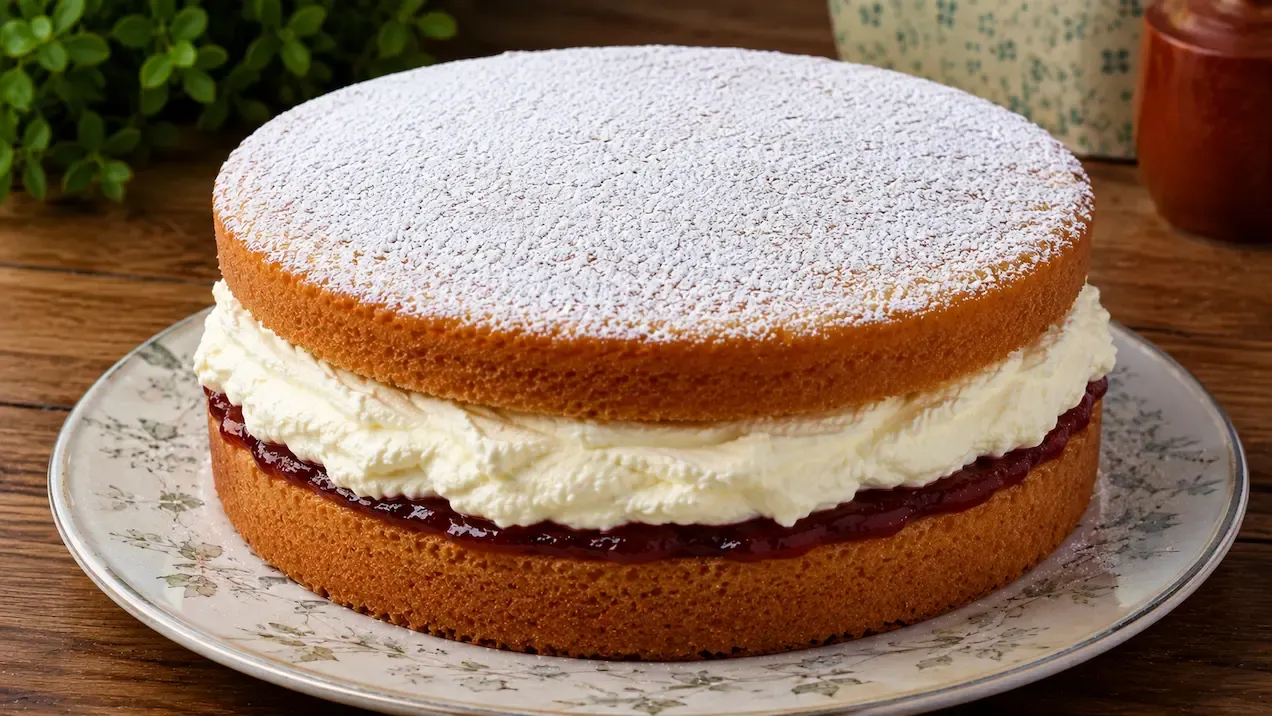
Victoria Sandwich Cake
A soft, buttery Victoria sponge cake layered with homemade strawberry jam and freshly whipped cream — the British afternoon-tea standard, elevated. The reverse-creaming method gives a tender, even crumb that holds its shape under the filling. Adapted from Bake with Zoha.
Ingredients
For the sponge
- 1½ cups all-purpose or cake flour
- 1 cup granulated sugar
- ¼ tsp baking powder
- ¼ tsp baking soda
- ½ tsp salt
- 1 cup unsalted butter, softened and cut into cubes
- 4 large eggs, room temperature
- ¼ cup buttermilk, room temperature
- 2 tsp vanilla extract
For the strawberry jam
- 1½ cups strawberries, chopped
- ¼ cup granulated sugar
- 1 tsp lemon juice
For the whipped cream
- ¾ cup heavy whipping cream, cold
To decorate
- to dust powdered sugar
- optional fresh strawberries
Method
- 00
Preheat the oven to 335 °F (168 °C), conventional — no fan. Line two 8-inch cake pans with parchment and grease.
- 01
Add the flour, sugar, baking powder, baking soda, and salt to the bowl of a stand mixer. Whisk to break up any lumps.
- 02
Add the cubed softened butter to the bowl. With the whisk attachment, mix on medium for 30–60 seconds until the mixture looks like clumpy, coarse sand. Do not overmix.
- 03
In a separate bowl, crack the eggs and add the buttermilk and vanilla. Whisk lightly to break the yolks and combine.
- 04
With the mixer running on medium, slowly pour the egg mixture into the flour-butter base. Raise the speed to medium-high and whisk for about 2 minutes until the batter is smooth, thick, fluffy, and pale. This step is where air enters — but stop once you hit pale and fluffy, or you build too much gluten.
- 05
Divide the batter evenly between the two pans (use a scale if you have one) and smooth the tops.
- 06
Bake for 20–22 minutes. A toothpick in the centre should come out with light moist crumbs but no wet batter. Don't push it past that — sponge dries out fast.
- 07
Cool the cakes in their pans for 15–20 minutes, then turn out to finish cooling on a rack.
- 08
While the cakes bake, make the jam: combine the chopped strawberries, sugar, and lemon juice in a saucepan. Cook on low for about 15 minutes, stirring and mashing some of the fruit as it goes, until the mixture is jammy but still loose.
- 09
Pull the jam off the heat and let it cool 20 minutes — it thickens further as it cools.
- 10
Whip the cold heavy cream on medium-high to stiff peaks. It should hold its shape; stop before it turns grainy.
- 11
To assemble: place one cake layer upside-down on the stand (the flat bottom is the prettier face). Spread on a thick layer of the strawberry jam — use all of it.
- 12
Spoon the whipped cream over the jam and very gently spread it out, keeping it about ½ inch away from the cake's edge so it doesn't squeeze out under the next layer.
- 13
Cover with the second cake, also upside-down. The cream will spread to the edges under the weight of the top layer.
- 14
Dust with powdered sugar and top with fresh strawberries if using. Slice and serve.
Notes from the kitchen
- ·Weigh the flour. Cup measurements vary wildly; too much flour is the single most common cause of a dry sponge.
- ·Butter, eggs, and buttermilk must all be at room temperature. Cold ingredients refuse to emulsify and the batter goes lumpy.
- ·Reverse-cream properly. 2 minutes of whisking after the eggs go in is the air-incorporation step. Underbeat and the cake is dense; overbeat and the gluten tightens it up.
- ·Don't overcook the jam. Pull it the moment it looks jammy — it sets further as it cools.
- ·Jam goes on first. It's thicker than cream, so spreading it over the cream is a losing battle.
- ·Keep the cream layer ½ inch in from the edge. The top cake's weight pushes it outward; start centred or it overflows.
You might also like
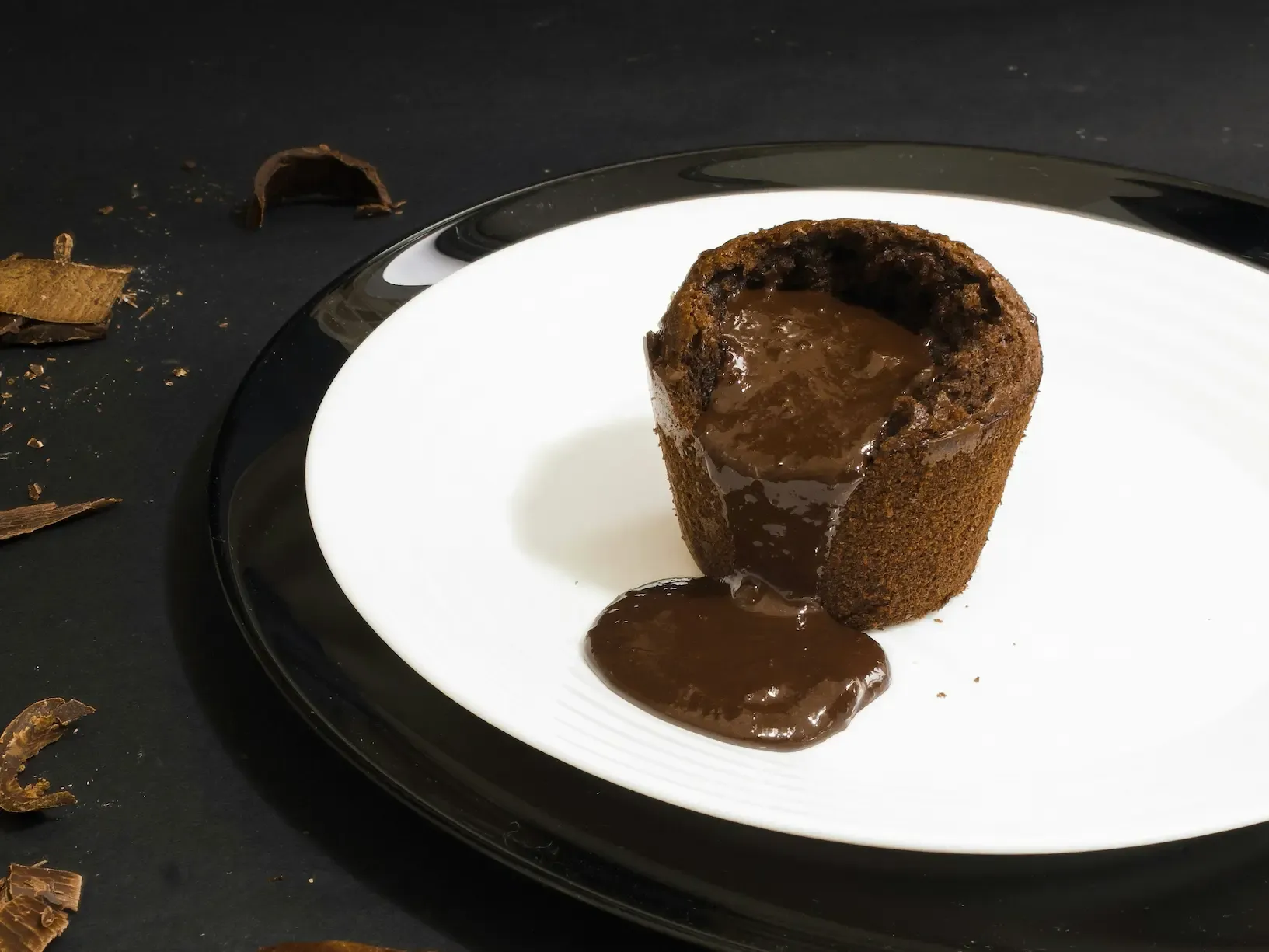
Molten Chocolate Lava Cake
Four small cakes with a crisp shell and a centre that pours when broken. Mix in one bowl, bake hot and fast.
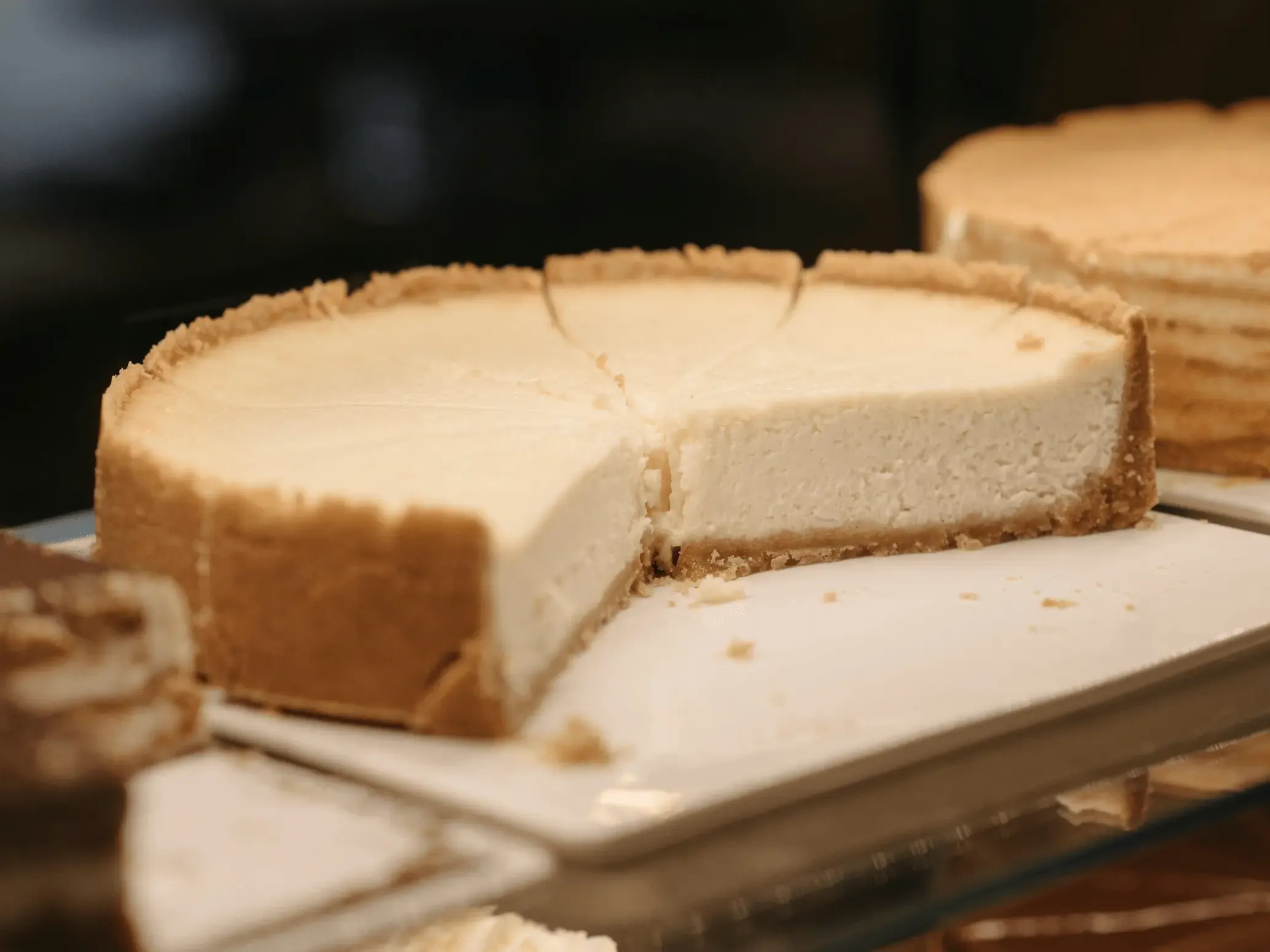
New York Cheesecake
Dense, tall, and silky — the New York standard. Graham-cracker crust, four blocks of cream cheese, six eggs, baked low in a water bath and rested overnight. Adapted from Once Upon a Chef.