
Strawberries are not berries — but bananas and avocados are
The word "berry" in everyday English means something like "small, round, soft fruit." In botany, it means something precise and entirely different, with a technical definition that produces a list of berries so counterintuitive it reads like a joke: bananas, yes. Avocados, yes. Tomatoes, yes. Cucumbers, yes. Strawberries, no. Raspberries, no. Blackberries, no.
The botanical definition
In botany, a berry is defined as a fleshy fruit that develops from a single flower with one ovary, and that has the seeds embedded in the fleshy part of the fruit. This is called a true berry. The fleshy portion must develop entirely from the ovary wall (called the pericarp), not from any other floral tissue.
By this definition:
- Bananas are berries. They develop from a single ovary, have multiple seeds embedded in the flesh (though commercial varieties are bred to be essentially seedless), and the entire flesh develops from the ovary wall.
- Avocados are berries with a single large seed.
- Tomatoes are berries — fleshy, develop from a single ovary, seeds embedded in flesh.
- Grapes are berries.
- Cucumbers are technically a modified form of berry called a pepo.
Why strawberries aren't
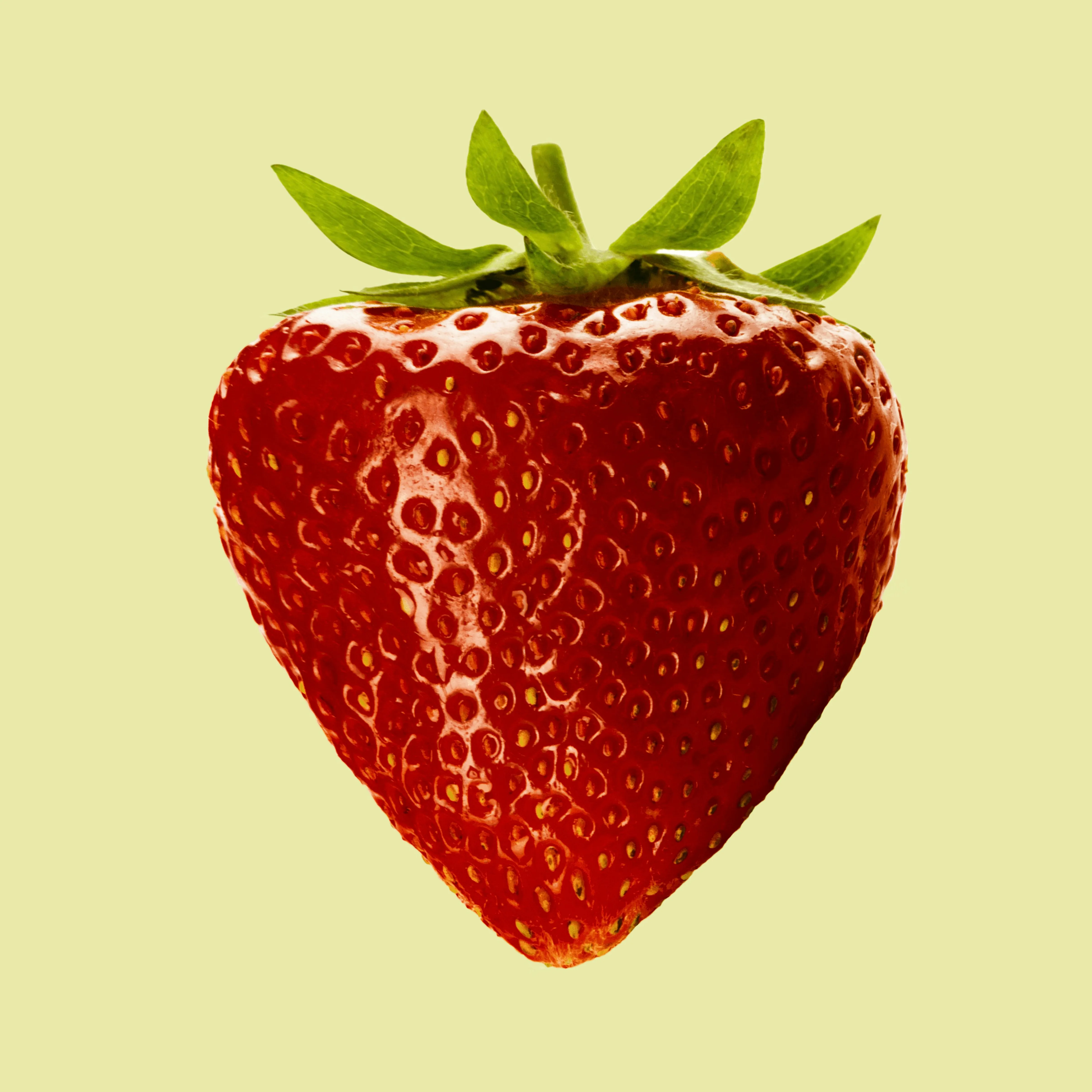
A strawberry is what botanists call an "accessory fruit" or "false fruit." The red fleshy part you eat does not develop from the ovary. It develops from the receptacle — the enlarged base of the flower. The actual fruits of the strawberry plant are the tiny yellowish specks (technically achenes) dotting the surface, each of which contains one seed. You are eating the flower's stem tissue, not its ovary.
Raspberries and blackberries are "aggregate fruits" — each consists of many small drupelets, each druple being a separate tiny fruit developing from a separate ovary within the same flower. They are not berries; they are clusters of drupes.
What a drupe is
Drupes are the other category that gets confusing. A drupe is a fruit with an outer fleshy part and a hard inner shell (endocarp) containing the seed. Peaches, plums, cherries, mangoes, and olives are drupes. Coconuts are drupes. The coconut's "shell" is the endocarp; the husk is the outer fleshy layer.
Almonds and walnuts are also drupes — the nut is the seed inside the hard shell, and what we call the "shell" is the endocarp.
Why this matters
The botanical definitions exist for a reason: they describe the developmental biology of the fruit, which is important for understanding the plant's reproductive strategy, evolutionary relationships, and agricultural characteristics. From a plant's perspective, the relevant question is whether the seed-containing structure is effectively dispersed.
From a culinary and cultural perspective, "berry" means something entirely different and the botanical definition is mostly irrelevant. Cooks are not going to make strawberry pie more confusing by calling it false-fruit pie. But the gap between the two systems is a good illustration of how everyday language and technical language can use the same words to mean completely different things, and how much invisible precision sits beneath ordinary terminology.
The strawberry's misclassification in common speech is also, in a minor way, a useful reminder that common sense is often botanically wrong.