
Churchkhela: the Georgian energy bar that predates protein bars by 1,000 years
In the markets of Tbilisi, Telavi, and every wine-producing town in Georgia, long candle-shaped objects hang in clusters — deep burgundy, amber, or near-black, depending on the grape. These are churchkhela. They are made the same way they have been made for at least a thousand years, require no refrigeration, last for months, and provide enough caloric density and protein to sustain a person through hard physical activity. The modern energy bar reinvented them, less deliciously, in the late twentieth century.
How churchkhela is made
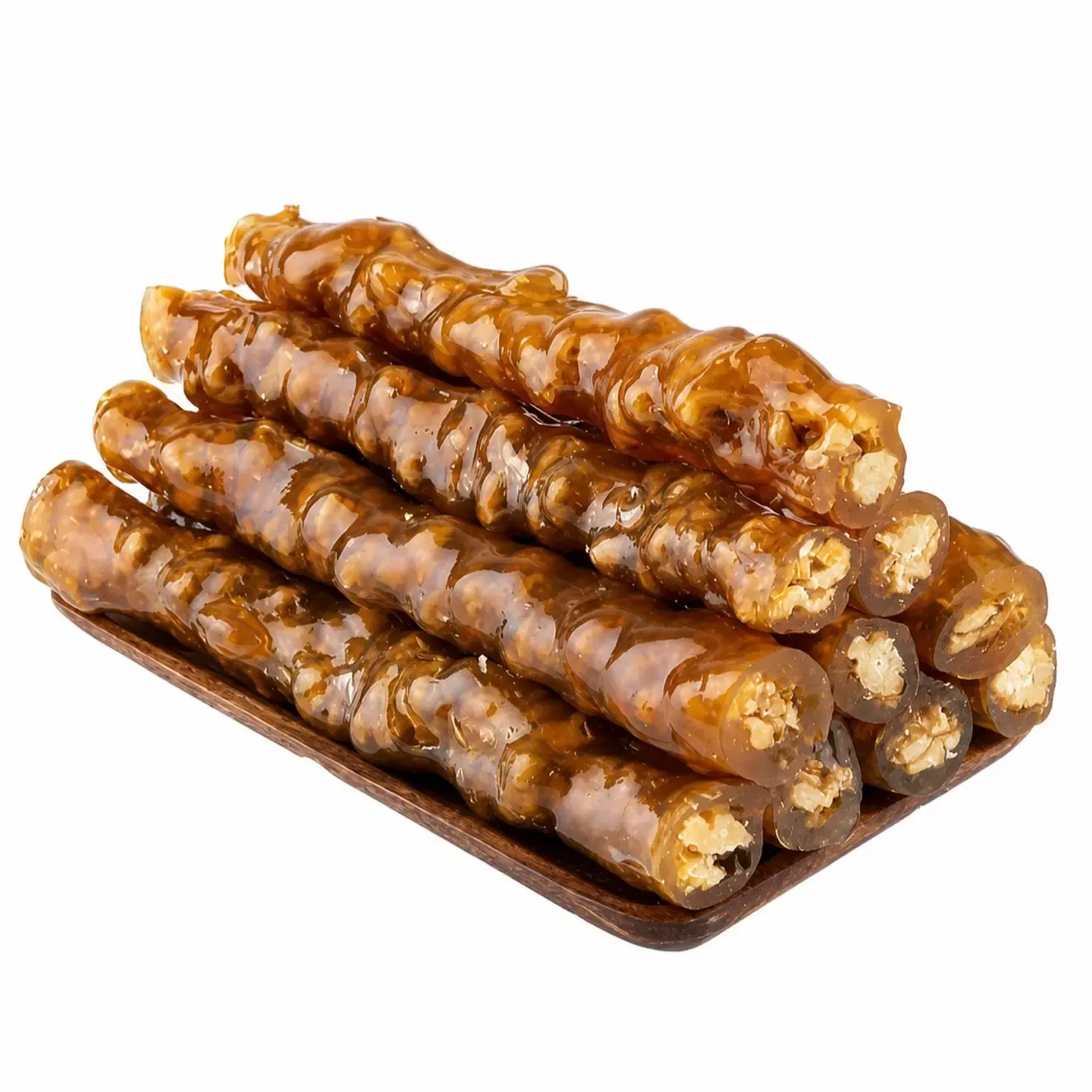
The process begins in autumn, coinciding with the grape harvest. Fresh grape must — the juice pressed from crushed grapes, seeds, and skins before fermentation — is cooked down with flour (typically wheat or corn flour) until it thickens to a consistency that coats a spoon. This mixture is called tatara (in eastern Georgia) or pelamushi, depending on the region.
Meanwhile, walnuts or hazelnuts are threaded on a long piece of string using a needle, forming a strand sometimes thirty centimetres or more in length. This strand is dipped repeatedly into the hot tatara, pulled out, and allowed to cool and dry. After each dip the coating thickens slightly. After several coats — typically five to ten — the churchkhela is hung to dry for several weeks until the outside hardens to a firm, waxy shell and the interior remains slightly chewy.
The result is dense: roughly 40% sugars from the grape must, 15–20% fats from the nuts, and a significant protein contribution from the nuts as well. A single churchkhela provides several hundred calories in a form that doesn't spoil, doesn't melt, and doesn't need anything to contain it.
The warrior food
Georgian oral and written tradition consistently describes churchkhela as food for soldiers and travellers. The eastern Georgian region of Kakheti — the country's main wine-producing area, where churchkhela is most associated — has a history of defending against Persian, Ottoman, and Mongol invasions over many centuries. The food's portability and durability made it practical for extended campaigns or mountain travel.
Whether the specific connection to medieval warriors is entirely historical or partly legendary is uncertain. What is clear is that churchkhela has been made continuously in Kakheti for many hundreds of years and that its properties make it well suited to exactly the purposes tradition claims for it.
Regional variations
Churchkhela varies significantly across Georgia and the broader Caucasus region. In western Georgia it is often made with corn flour rather than wheat and with hazelnuts rather than walnuts. In Armenia, a similar product called sujuk or sudjuk is made with a different nut mixture. In other Caucasian cuisines, local grape varieties and nut traditions produce their own versions.
Within Georgia, the grape variety used shapes the flavour dramatically. Rkatsiteli must produces a lighter, more tart churchkhela; Saperavi gives a deep, jammy, intensely purple version; Isabela grapes give an unusually sweet, aromatic result. Connoisseurs have preferences by region and grape in the same way wine enthusiasts do.
The modern version
Commercial churchkhela is sold throughout Georgia and is exported as a representative Georgian food product. The best is still made by hand by individual families and small producers during the autumn harvest season, eaten fresh or hung to mature through winter. It is common at Georgian feasts (supras) alongside wine, khachapuri, and the elaborate cold dishes that begin a Georgian meal.
It is also, by any reasonable nutritional accounting, an effective energy food — something between a confection and a meal, requiring no preparation, no refrigeration, and no utensils.