
Aged cheese smells like feet because it's made by the same bacteria
Cheese, at its most fundamental, is controlled rot. The transformation of milk into a wheel of aged cheese involves deliberately cultivating bacteria, moulds, and yeasts on food and allowing their metabolic processes to alter texture, flavour, and — in the case of washed-rind varieties — smell. The bacteria responsible for some of the most powerfully aromatic cheeses are exactly the ones that live on human skin.
Brevibacterium linens
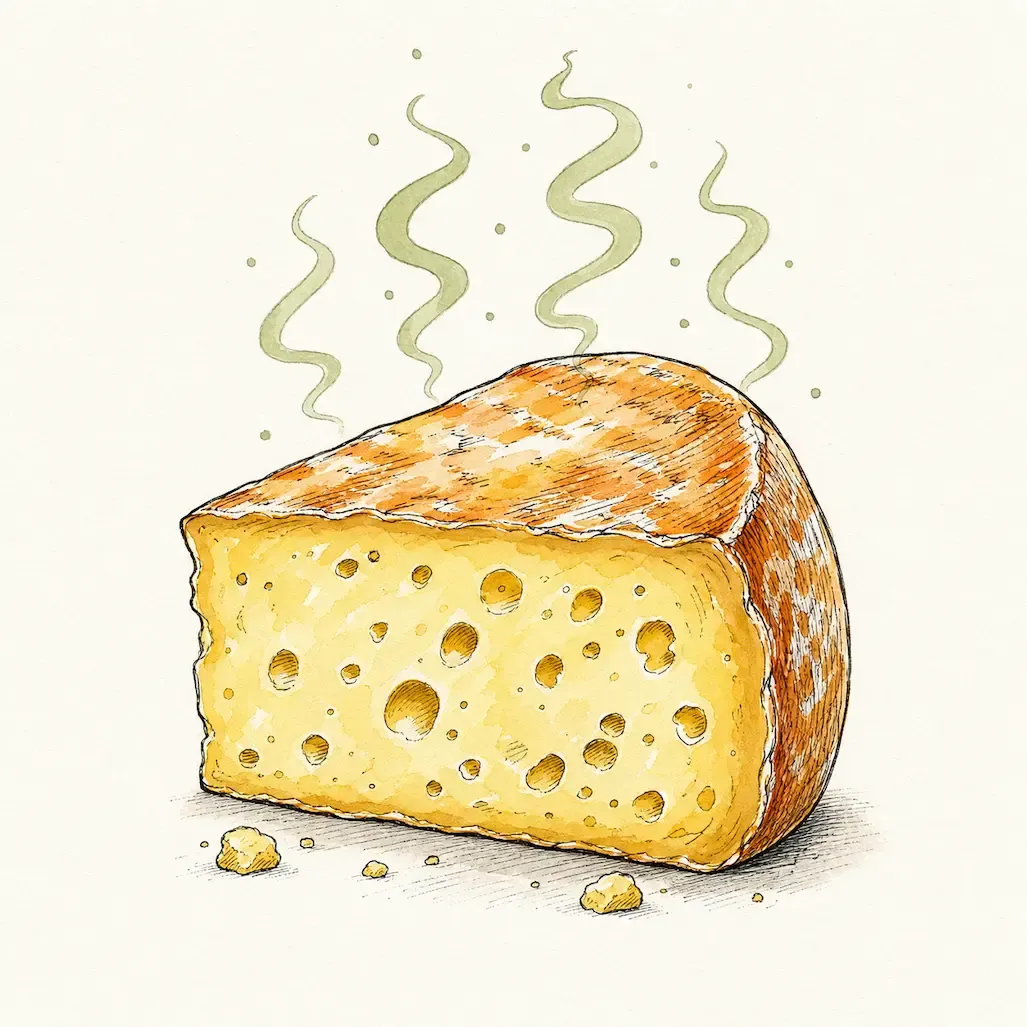
Brevibacterium linens is an orange-pigmented bacterium found naturally in soil and on the surface of mammalian skin, including human feet. It metabolises proteins and amino acids, producing sulphur compounds — particularly methanethiol and dimethyl sulphide — that are responsible for its characteristic smell: a combination of sulphurous, cabbage-like, and frankly foot-like notes.
Affinage (cheese ageing) teams deliberately apply B. linens to the surface of washed-rind cheeses. The bacteria colonise the exterior and metabolise the cheese's outer layer, producing the distinctive orange or reddish-orange rind and the powerful aroma. The interior of the cheese typically remains milder; the rind is doing most of the olfactory heavy lifting.
Washed-rind cheeses
Washed-rind cheeses are periodically bathed in a brine solution, wine, beer, or spirit during ageing. This washing serves two purposes: it supplies moisture that B. linens needs to thrive, and it prevents the growth of undesirable surface moulds that might otherwise colonise the rind. The result is a controlled bacterial environment on the cheese surface.
Classic washed-rind cheeses include Époisses from Burgundy (washed with marc de Bourgogne, a grape spirit), Munster from Alsace, Limburger from Belgium and Germany, and Taleggio from northern Italy. Each has a distinctive character shaped by its specific bacterial culture, the washing liquid used, the milk source, and the ageing environment.
Why the smell doesn't predict the taste
One of the less intuitive facts about pungent cheese is that the most aggressively aromatic varieties are often among the mildest-tasting. Limburger, notorious for its smell, has a relatively creamy, mild flavour once you get past the rind. Époisses, which has a smell strong enough that it is reportedly banned from French public transport, has a rich, fruity, complex interior that bears little resemblance to what your nose prepared you for.
This disconnect exists because the volatile compounds responsible for the smell are concentrated on the rind, which many people don't eat, and because smell and taste are processed differently. The sulphur compounds that B. linens produces are highly volatile — they escape into the air and reach your nose before the cheese reaches your tongue. The palate gets a different, mellower version of the same cheese.
The human skin connection
The presence of B. linens on human feet explains why feet and certain cheeses share their smell so precisely — it is not an analogy or a coincidence but the same organism performing the same chemistry. The warm, damp surface of the foot provides similar conditions to those the affinage team works to create on the cheese rind.
What separates cheese from the other application of this bacterium is, ultimately, intention, craftsmanship, and the result of controlled maturation. The smell is a signal, not a flaw — a marker that the right organisms are doing their work.